banner
banner-mobile

How Do Divorces Work in Talladega County

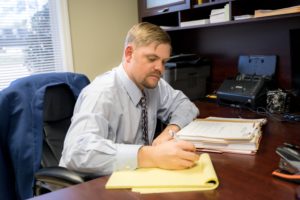
Steven A. Harris of The Harris Firm LLC meeting with a Talladega County divorce client

Talladega County is unusual among Alabama counties in one important way: it splits Circuit Court filings between two divisions. The Talladega Division sits in the city of Talladega — the county seat — and the Sylacauga Division sits in Sylacauga to the south. Where you live in Talladega County determines which courthouse your divorce gets filed in. Most Alabama counties have a single courthouse handling all Circuit Court matters; Talladega’s two-division setup is a procedural quirk that catches out-of-county lawyers off-guard and that residents need to understand before they file.

I’m Steven Harris, founder of The Harris Firm LLC. Our firm has handled divorces for Talladega County families since 2007, filing cases in both the Talladega and Sylacauga divisions depending on where each client lives. This post walks through how divorces actually work in Talladega County — the two-division setup, what each division covers, the filing process, and what makes a Talladega divorce different from divorces in neighboring counties like Calhoun, Coosa, Clay, and St. Clair.

Talladega County’s Two-Division Court Structure

Most Alabama counties — including all the counties immediately surrounding Talladega — have one circuit court division. Calhoun has one (in Anniston). Clay has one (in Ashland). Coosa has one (in Rockford). St. Clair has two divisions (Ashville and Pell City), which makes St. Clair the only other neighbor of Talladega with a similar setup. Statewide, only a handful of Alabama counties split their Circuit Court between two locations — Jefferson (Birmingham and Bessemer), Marshall (Albertville and Guntersville), Barbour (Clayton and Eufaula), Coffee (Elba and Enterprise), Tallapoosa (Alexander City and Dadeville), and a few others.

Talladega County divides its Circuit Court between the Talladega Division and the Sylacauga Division. Generally speaking, the Talladega Division handles cases for the northern half of the county and the Sylacauga Division handles cases for the southern half. The exact dividing line falls roughly mid-county, and we confirm which division applies to your specific address before filing.

Talladega Division

Courthouse: One Courthouse Square, Talladega, AL 35161

Generally covers: Talladega, Childersburg, Lincoln, Munford, and most of the northern half of Talladega County

Phone: (256) 761-2102

Sylacauga Division

Courthouse: 400 North Norton Avenue, Sylacauga, AL 35150

Generally covers: Sylacauga, Goodwater, and most of the southern half of Talladega County

Phone: (256) 245-4352

Both divisions are part of the same circuit and follow the same Alabama Rules of Civil Procedure. The filing fee is the same regardless of which division (approximately $270, paid to the court clerk). But each division has its own judges, its own calendar, and its own clerks. Cases filed in the Talladega Division stay in the Talladega Division for the life of the case; cases filed in the Sylacauga Division stay in the Sylacauga Division. They don’t move between courthouses.

If you and your spouse live in different parts of Talladega County and your residences fall in different divisions, the case is typically filed in the division where the spouse who files actually lives. We sort this out during the consultation based on your specific address. For more about our work in Talladega County generally, see our Talladega divorce lawyers page.

Where Talladega County Divorces Get Filed (the Basic Rules)

Alabama law sends every divorce case to the Circuit Court. For Talladega County residents, that means the Talladega County Circuit Court — either the Talladega Division or the Sylacauga Division — depending on which side of the county you live in.

To file for divorce in Alabama at all, at least one spouse must have been an Alabama resident for the previous six months. That’s a state-level rule that occasionally catches families who recently moved to the area from out of state. Once the residency requirement is satisfied, venue (which county hears your case) generally follows where the parties live. For Talladega County residents, venue almost always lands in Talladega County — the only question is which of the two divisions handles it.

If one spouse has moved to a neighboring county (Calhoun to the north, Coosa to the south, Clay to the east, St. Clair to the west, or Shelby further west), either spouse can typically file in either county. In practice, the case usually goes to whichever county the children primarily live in, where the marital assets are located, or whichever courthouse is more practical.

The Talladega Filing Fee — Approximately $270

The filing fee for divorces in Talladega County runs approximately $270, paid to the court clerk when the case is filed. That’s slightly above the Alabama state average (~$230). It’s higher than Limestone (~$240) or Montgomery (~$205), comparable to Calhoun (~$260), and lower than Shelby (~$295) or Madison (~$340). The filing fee is the same whether your case lands in the Talladega Division or the Sylacauga Division.

The filing fee is separate from any attorney fee and is the client’s responsibility regardless of which spouse files. We advance the filing fee to the clerk at filing and clients reimburse us before submission. For filing fees in other Alabama counties, see our Alabama divorce filing fees by county page.

The Two Paths Your Talladega County Divorce Can Take

Talladega County divorces, like every Alabama divorce, fall into one of two categories.

Uncontested divorce. You and your spouse agree on every major issue — property division, custody of any minor children, child support, alimony, and how debts are handled. With agreement in place, the case is essentially paperwork-only. Neither spouse appears in court. The Circuit Judge (in either the Talladega or Sylacauga Division, depending on where you live) reviews the file and enters the final decree after Alabama’s mandatory 30-day waiting period.

Contested divorce. You and your spouse disagree on one or more material issues. The case follows the full civil procedure track — discovery (interrogatories, document requests, sometimes depositions), motions, status conferences, court-ordered mediation, and trial if no settlement is reached. Contested Talladega County divorces typically take six months to two years to resolve, depending on what’s disputed.

The biggest decision in any Talladega County divorce is which path you can credibly take. If real agreement exists, the uncontested route is faster, dramatically cheaper, and easier on any children involved.

How an Uncontested Talladega County Divorce Actually Works

For Talladega County couples who agree on the major issues, the uncontested divorce process at our firm runs roughly like this:

  1. Free phone consultation. Call our Birmingham office and we’ll spend 15-20 minutes confirming you qualify for an uncontested divorce, walking through what’s involved, and explaining timing and cost. We’ll also confirm which Talladega County division your case will be filed in based on your address.
  2. Engagement and flat fee. Our flat attorney fee for an uncontested divorce is $690 if you have no minor children, or $890 if you have minor children. The Talladega County filing fee of approximately $270 is on top of that, paid to the court clerk.
  3. Document drafting. We send you a short questionnaire. From your answers, we draft your divorce complaint, settlement agreement, parenting plan (if children are involved), and Rule 32 child support calculation.
  4. Signing. You and your spouse sign the documents — electronically, in person at our Birmingham office, or by mail. Talladega County doesn’t have the strict signing-window requirement that Shelby and Montgomery have, so signatures from a few weeks earlier are generally fine.
  5. Filing with the appropriate Talladega County division. We file the case at either the Talladega Division courthouse (One Courthouse Square, Talladega) or the Sylacauga Division courthouse (400 N. Norton Avenue, Sylacauga) based on where you live. Alabama’s 30-day statutory waiting period clock starts on the filing date.
  6. Final decree. After 30 days have passed, the Circuit Judge in your division reviews the file and enters the final divorce decree. We send you a certified copy.

Total elapsed time from your first call to your final decree is typically 35 to 50 days. For more on the uncontested process, see our Alabama uncontested divorce hub.

How a Contested Talladega County Divorce Works

If genuine disagreement exists, the contested track is unavoidable. The filing spouse files a complaint for divorce with the appropriate Talladega County Circuit Court clerk (Talladega Division or Sylacauga Division). The other spouse is served with the complaint and has 30 days to file an answer. Both sides then exchange discovery — written questions answered under oath, document requests, and sometimes depositions where witnesses are questioned in person.

After discovery, the court typically orders mediation, where a neutral third party helps both sides try to settle. Most Talladega County contested cases settle at or after mediation. If mediation fails, the case proceeds to trial where the Circuit Judge in your division hears evidence and issues a divorce decree resolving every disputed issue. Whether your case is in the Talladega Division or the Sylacauga Division, the procedural track is the same — only the courthouse, judge, and calendar differ.

Contested cases are billed hourly against an initial retainer. The retainer amount depends on the complexity of the case, the issues disputed, and the likelihood of trial.

What Else Talladega County Residents Should Know

One advantage of Talladega’s two-division setup: Most county residents have a short drive to their courthouse. Talladega Division residents (Talladega, Childersburg, Lincoln, Munford) typically drive 5-20 minutes. Sylacauga Division residents (Sylacauga, Goodwater) likewise have a short drive to their courthouse. Compare that to single-division counties where residents in outlying cities sometimes face 20-30+ mile drives to the county seat. Talladega County’s two-division structure means most residents are reasonably close to their courthouse.

A few more Talladega-specific points worth knowing:

  • No mandatory parenting class. Talladega County does not require divorcing parents to take a parenting class for cases involving minor children. That’s different from neighboring Calhoun County, which always requires an in-person parenting class for any divorce involving children under 19. A specific Talladega judge could occasionally order a class in an unusual case, but it’s not the norm.
  • No strict document-signing window. Some Alabama counties (Shelby and Montgomery, notably) require settlement-agreement signatures to be reasonably recent at the time of filing. Talladega doesn’t enforce this strictly. Signatures from weeks or months earlier are generally fine, which gives Talladega divorces a bit more scheduling flexibility than Shelby or Montgomery cases.
  • Both divisions follow the same procedural rules. The Alabama Rules of Civil Procedure, the Rule 32 child support guidelines, the 30-day statutory waiting period, and the substantive divorce law all apply identically in both the Talladega Division and the Sylacauga Division. The two-division split is administrative, not substantive.
  • Birmingham is the closest Harris Firm office. Our firm doesn’t have an office in east-central Alabama, but Birmingham is about 50-55 miles from both Talladega and Sylacauga. For most clients, the entire uncontested divorce process can be handled remotely — phone consultation, electronic document signing, no need to drive anywhere.

How Long Will My Talladega County Divorce Take?

Uncontested cases typically wrap up 35 to 50 days from your first call. Of that, 30 days is the statutory waiting period required by Alabama law — the Circuit Judge in your Talladega County division cannot enter a final divorce decree until at least 30 days have passed since the case was filed. No firm can speed up that 30-day floor. What we can do is make sure the paperwork is drafted, signed, and filed as quickly as possible so the 30-day clock starts running early.

Contested cases take six months to two years, sometimes longer if the issues are complex and both spouses are dug in. The Talladega and Sylacauga divisions both move at a reasonable pace compared to larger metro counties. The biggest variables are how cooperative both sides are about discovery, the specific judge’s calendar, and whether mediation produces a settlement.

Frequently Asked Questions About Talladega County Divorces

Does it matter which Talladega County division I file in?

It matters in the sense that your case has to be filed in the correct division based on where you live. You can’t choose; venue is determined by your address. If you live in the city of Talladega or the northern half of the county, your case goes to the Talladega Division at One Courthouse Square. If you live in Sylacauga or the southern half, your case goes to the Sylacauga Division at 400 North Norton Avenue. We confirm which division applies during the consultation.

Which division handles cases for Childersburg, Lincoln, Munford, Goodwater, or other Talladega County cities?

Generally: Talladega, Childersburg, Lincoln, and Munford go to the Talladega Division. Sylacauga and Goodwater go to the Sylacauga Division. The exact dividing line falls roughly mid-county, and we check the specific address to make sure we file in the right place. The Talladega and Sylacauga clerks can also confirm if you call them directly.

What if my spouse and I live in different Talladega County divisions?

The case is filed in the division where the spouse who initiates the case (the plaintiff) actually lives. If your spouse later moves to the other division, the case stays where it was filed — Alabama doesn’t transfer divorce cases between divisions of the same county once they’re underway.

Does Talladega County require a parenting class for divorcing parents?

No. Talladega County doesn’t have a mandatory parenting class requirement, unlike some neighboring counties (Calhoun, for example, requires an in-person class for any divorce involving minor children). A specific Talladega judge could order a parenting class in an unusual case, but it’s not the norm and isn’t something Talladega parents need to plan around as a baseline.

How much will my Talladega County divorce cost?

For uncontested cases, our flat attorney fee is $690 if you have no minor children, or $890 if you have minor children. The Talladega County filing fee adds approximately $270. So your total out-of-pocket for an uncontested Talladega divorce is roughly $960 (no children) to $1,160 (with children) unless you need extras like a quit claim deed ($750 flat fee to transfer real estate after divorce) or a QDRO for splitting a retirement account. Contested cases are billed hourly against a retainer.

Where are the Talladega County courthouses located?

The Talladega Division courthouse is at One Courthouse Square, Talladega, AL 35161. The Sylacauga Division courthouse is at 400 North Norton Avenue, Sylacauga, AL 35150. Both are part of the same Talladega County Circuit Court system but operate as separate courthouses with separate judges, calendars, and clerks.

Talk With a Talladega County Divorce Attorney Today

If you live in Talladega, Sylacauga, Childersburg, Lincoln, Munford, Goodwater, or anywhere else in Talladega County and you are considering divorce, the most useful first step is a phone consultation. For uncontested cases, the consultation is free — we’ll spend 15-20 minutes confirming you qualify, confirming which division your case will be filed in, walking through cost and timing, and answering your specific questions. Call our Birmingham office at (205) 201-1789 — the closest Harris Firm location to Talladega County, about 50-55 miles from both Talladega and Sylacauga. We handle every Talladega County divorce personally and will make sure your case lands in the right division and meets all the local procedural requirements.

Quick Contact

Choose from the office locations above for contact details

Phone

CALL NOW

Fill Out a Questionnaire

Get started

MAKE A PAYMENT ONLINE

Make Payment